Home About
Fitness Precision Medicine Recovery Mental Performance MedLab MedSpa
Explore All Blog Getting Started Join Waitlist
ALYZE DEXA Scan
MedLab

DEXA Scan

The gold standard in body composition analysis. Dual-energy X-ray absorptiometry measures fat mass, lean mass, bone mineral density, and visceral fat with clinical-grade precision — giving you the most accurate picture of what's happening inside your body.

Benefits Usage Guide Research
Health Benefits

Why DEXA?

DEXA scanning is the most validated method for body composition analysis. Here's what it reveals and why it matters.

Precision Body Composition

DEXA measures three distinct compartments — fat mass, lean mass, and bone mineral content — in a single scan. It provides regional breakdowns so you can see exactly where fat and muscle are distributed across your body.

±1-2%

Visceral Fat Quantification

Visceral adipose tissue (VAT) surrounding your organs is the most metabolically dangerous type of fat. DEXA quantifies VAT precisely, giving you a critical biomarker that standard scales and BMI completely miss.

Bone Density Assessment

DEXA is the WHO-recommended standard for diagnosing osteoporosis and assessing fracture risk. Early detection of bone mineral density loss allows for intervention before fractures occur — especially critical after age 40.

T-score

Asymmetry Detection

DEXA reveals left-right muscle imbalances and regional fat distribution patterns that may indicate injury risk, compensatory movement patterns, or hormonal imbalances that need clinical attention.

Progress Tracking

With high reproducibility (CV <1% for bone, ~1-2% for soft tissue), serial DEXA scans let you objectively track the effects of nutrition, training, and medical interventions over time — beyond what the scale can tell you.

<1% CV

Mortality Risk Stratification

Research shows that regional body composition — particularly high trunk fat and low limb lean mass — independently predicts mortality risk. DEXA provides these regional measurements that BMI and weight alone cannot capture.

Usage Guide

How to prepare for your DEXA scan.

01

Schedule Consistently

For accurate tracking over time, schedule your scans at the same time of day and under similar conditions. Morning scans after an overnight fast yield the most consistent baseline readings.

02

Hydration & Fasting

Maintain normal hydration but avoid eating for 2-4 hours before your scan. Avoid heavy exercise the morning of your scan, as fluid shifts from exercise can affect soft tissue measurements.

03

Wear Appropriate Clothing

Wear lightweight, metal-free clothing. Remove all jewelry, belts, and items with zippers or snaps. You'll lie flat on the scanner table for approximately 6-10 minutes.

04

The Scan

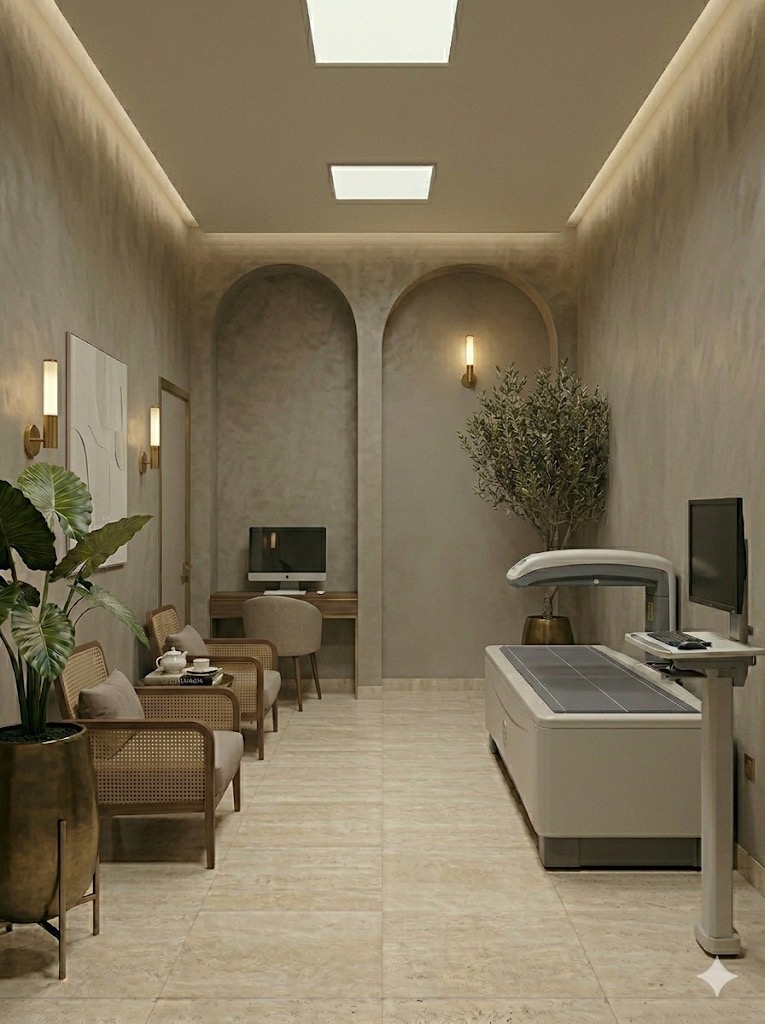
The DEXA scanner passes two low-dose X-ray beams over your body. You simply lie still — the scan is painless, noninvasive, and typically takes under 10 minutes. Total radiation exposure is less than a day of natural background radiation.

05

Review Results with Your Practitioner

Your ALYZE practitioner will walk you through your results — body fat percentage, lean mass by region, bone density T-scores, visceral fat, and how these compare to your previous scans and age-matched norms.

Pro Tips

  • Schedule scans every 3-6 months to track meaningful changes in body composition
  • Always use the same scanner for serial comparisons — different machines can produce slightly different readings
  • Pair DEXA with bloodwork for a complete metabolic picture
  • Your ALYZE practitioner will use DEXA data to calibrate your fitness and nutrition protocols
  • Bone density results are especially important for women over 40 and men over 50
  • DEXA visceral fat measurement is more accurate than waist circumference for assessing metabolic risk
  • Bring previous scan results from other facilities if available — your practitioner can contextualize trends

Important: DEXA scanning uses a very low dose of ionizing radiation (approximately 0.001 mSv per scan). It is not recommended during pregnancy. If you are pregnant or suspect you may be, inform your ALYZE practitioner before scheduling. Individuals with recent barium or contrast dye studies should wait 7-10 days before a DEXA scan.

Clinical Research

The evidence.

DEXA is the most extensively validated body composition measurement tool in clinical medicine. These are key studies.

Clinical Applications

Clinical Applications of Body Composition Measurements Using DXA

Laskey · Journal of Applied Physiology · 2003
DXA can measure fat mass, lean mass, and bone mineral content in a single whole-body scan with high precision and low scanning time, making it attractive for clinical prevention and monitoring.
View on PubMed →
Accuracy · Methodology

Body Composition with Dual Energy X-Ray Absorptiometry: From Basics to New Tools

Ponti et al. · Acta Diabetologica · 2020
DXA fat mass and lean mass values show very good accuracy compared to CT and MRI, with advantages including very low radiation dose, accuracy, and simplicity of use for evaluating metabolic bone disorders, sarcopenia, and obesity.
View on PubMed →
30-Year Review

Body Composition by DXA

Shepherd et al. · Bone · 2017
Comprehensive 30-year review documenting rapid developments in DXA body composition assessment, including representative US data, ISCD guidance, and clinically useful regional body composition measures beyond whole-body percent fat.
View on PubMed →
Mortality · Body Composition

Association of X-Ray Absorptiometry Body Composition Measurements with Basic Anthropometrics and Mortality Hazard

Horlbeck et al. · PLoS ONE · 2021 · NHANES data
Using NHANES data, regional DEXA composition — specifically high trunk fat-free mass and low limb fat-free mass — was associated with elevated mortality risk, demonstrating clinical value beyond basic anthropometrics.
View on PubMed →
Visceral Fat

Validity and Reliability of Dual-Energy X-Ray Absorptiometry for the Assessment of Abdominal Adiposity

Park et al. · Obesity Research · 2004 · n = 65
DEXA provides valid and reliable assessment of abdominal adiposity when compared with multislice CT, supporting its use as a clinical tool for visceral fat quantification and metabolic risk assessment.
View on PubMed →
Bone Density · Osteoporosis

DXA Scanning in Clinical Practice

Blake & Fogelman · QJM · 2008
DXA is recognized as the WHO reference method for measuring bone mineral density with acceptable accuracy, good precision, and reproducibility — established as the best densitometric technique for diagnosing osteoporosis and estimating fracture risk.
View on PubMed →

Latest research.

Recent peer-reviewed studies on DEXA body composition, automatically sourced from PubMed.

Auto-updated from PubMed

Loading latest research...
ALYZE facility
ALYZE facility
ALYZE facility
ALYZE facility

Optimize your

recovery.
longevity.
resilience.
health.
recovery.
Join the Waitlist

Bountiful, Utah · alyze.health

The information provided on this page is for general informational and educational purposes only and is not intended as medical advice. The research cited is from peer-reviewed journals and is presented for educational purposes. Individual results may vary. Always consult with a qualified healthcare provider before beginning any new wellness practice, including body composition scanning.