Red light therapy — also known as photobiomodulation (PBM) or low-level laser therapy (LLLT) — has become one of the most discussed modalities in wellness and recovery. It has also become one of the most overhyped. Between consumer device marketing and social media claims, the signal-to-noise ratio around red light therapy can make it difficult to separate what is genuinely supported by science from what is wishful extrapolation.
This article is our attempt to be honest about both. Red light therapy is a legitimate therapeutic modality with a growing evidence base. It is also not a miracle cure. Understanding what it actually does — at the cellular level — is the starting point for using it effectively.
Red light therapy works through a remarkably specific biological pathway. When photons at wavelengths between 630 and 670 nanometers (red light) or 810 and 850 nanometers (near-infrared light) reach your cells, they are absorbed by an enzyme called cytochrome c oxidase (CCO), located in the mitochondrial electron transport chain.
CCO is the fourth complex in the chain — the final step before ATP is produced. Under normal conditions, nitric oxide (NO) can bind to CCO and inhibit its function, effectively slowing down energy production. Red and near-infrared light dissociates nitric oxide from CCO, removing this bottleneck and allowing the mitochondria to produce ATP more efficiently.
The freed nitric oxide then enters the surrounding tissue, where it acts as a vasodilator — increasing local blood flow. Meanwhile, the newly energized mitochondria increase their output of ATP and produce signaling molecules called reactive oxygen species (ROS) at low, beneficial levels. These ROS activate transcription factors like NF-kB and AP-1, which in turn upregulate genes involved in cellular repair, anti-inflammation, and antioxidant defense.
Red light therapy does not add energy to your cells. It removes a molecular bottleneck that was preventing your mitochondria from producing energy at their full capacity.
This is the most robust evidence base for red light therapy. A 2014 review in Seminars in Cutaneous Medicine and Surgery analyzed decades of research and concluded that red and near-infrared light significantly accelerate wound healing, reduce scar formation, and improve skin texture and tone. The mechanisms are well understood: increased collagen synthesis, enhanced fibroblast proliferation, and improved microcirculation.
Multiple randomized controlled trials have shown that PBM reduces the appearance of fine lines and wrinkles, improves skin roughness and collagen density, and accelerates healing from burns and surgical wounds. A 2014 study in Photomedicine and Laser Surgery found significant improvements in skin complexion and collagen density with red light treatments at 633 nm.
A landmark meta-analysis published in Sports Medicine in 2016 reviewed 46 randomized controlled trials and concluded that photobiomodulation applied before exercise can enhance athletic performance and accelerate post-exercise recovery. The effect sizes were meaningful: reductions in creatine kinase (a marker of muscle damage) and improvements in time to exhaustion.
Importantly, the timing matters. Studies show the greatest benefit when PBM is applied before exercise — not after. This pre-conditioning effect appears to prepare mitochondria for the increased energy demands of training, reducing the extent of cellular damage that occurs during intense effort.
Multiple systematic reviews have confirmed that red light therapy reduces pain and inflammation in osteoarthritis, particularly of the knee. A Cochrane Review — the gold standard of evidence synthesis — concluded that LLLT produces clinically meaningful reductions in pain and disability for knee osteoarthritis. The anti-inflammatory effect is mediated by downregulation of pro-inflammatory cytokines and prostaglandins.
Transcranial photobiomodulation — applying near-infrared light to the skull — is an emerging area of research with genuinely intriguing results. Small clinical trials have shown improvements in cognitive function, reaction time, and mood in healthy adults. Studies in traumatic brain injury patients have demonstrated reductions in symptoms. However, the field is still young, sample sizes are small, and optimal protocols have not been standardized.
A randomized, placebo-controlled trial published in the Journal of Clinical Endocrinology and Metabolism in 2013 showed that near-infrared light applied to the thyroid gland improved thyroid function in patients with Hashimoto's thyroiditis, with some patients able to reduce their levothyroxine dose. The study was small but well-designed, and the results have generated significant interest in replication efforts.
Several randomized controlled trials have demonstrated that red light therapy at specific wavelengths increases hair count and hair density in patients with androgenetic alopecia. The FDA has cleared several devices for this indication. The mechanism likely involves increased follicular blood flow and stimulation of hair follicle stem cells.
Despite the enthusiastic claims on social media, red light therapy has not been convincingly demonstrated to produce significant fat loss, cure depression, reverse diabetes, or treat cancer. Some of these areas are being researched, and preliminary results may be interesting, but the evidence does not yet support these claims as established benefits.
It is also critical to note that dosing matters enormously. Red light therapy follows a biphasic dose-response curve — too little has no effect, too much can actually inhibit cellular function. The therapeutic window depends on wavelength, power density, treatment duration, and tissue depth. This is precisely why consumer devices, which vary wildly in output and quality, often produce inconsistent results compared to clinical-grade equipment.
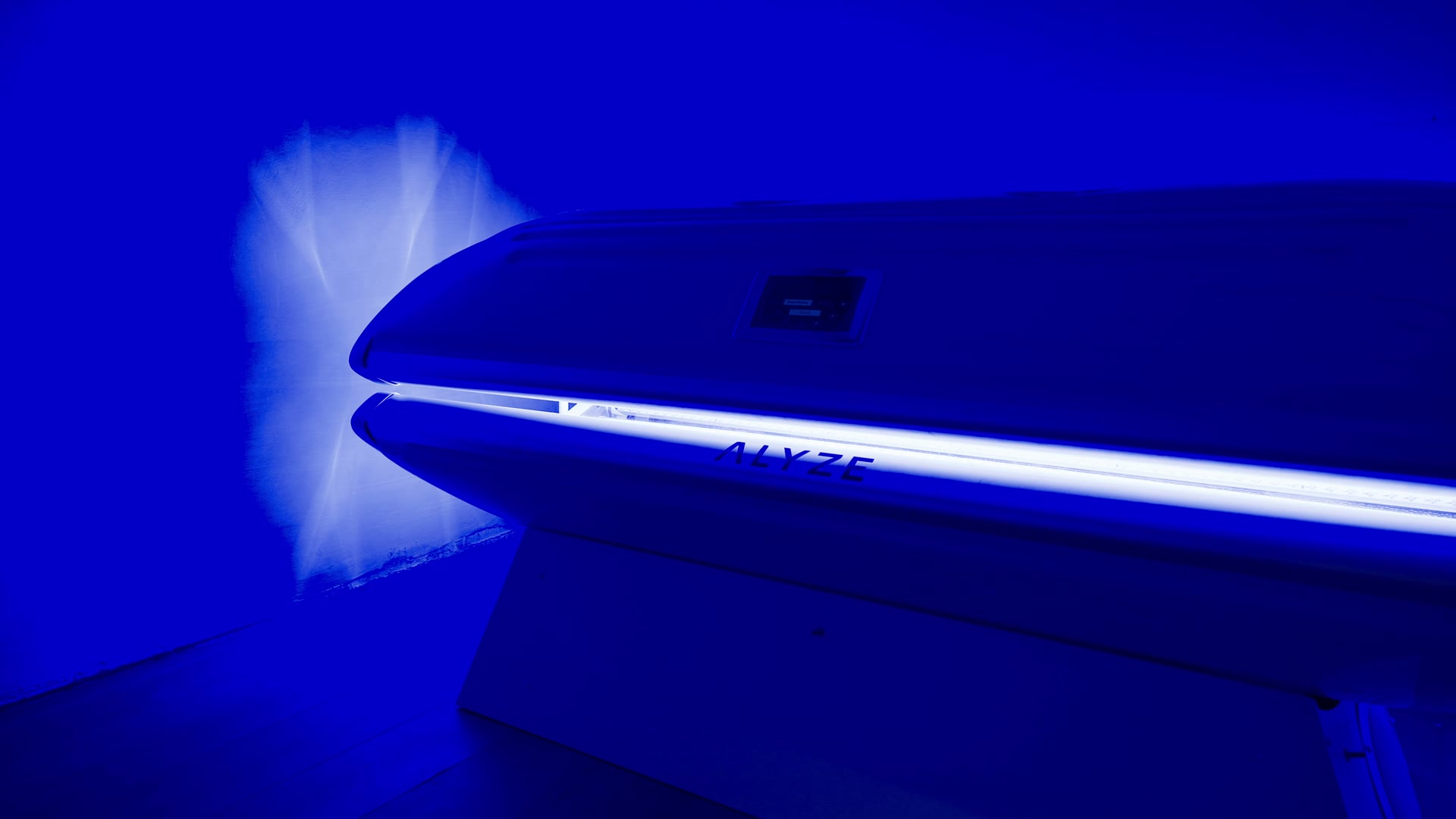
At ALYZE, our red light therapy panels deliver clinically validated wavelengths (630-670 nm and 810-850 nm) at therapeutic power densities. Sessions are calibrated based on treatment goals — pre-exercise conditioning uses different protocols than skin rejuvenation or joint pain management.
More importantly, red light therapy is integrated into your broader recovery protocol. When combined with cold plunge, the anti-inflammatory effects are amplified. When used alongside our DEXA and bloodwork data, we can track objective changes in body composition, inflammatory markers, and recovery metrics over time.
The modality works. But like everything at ALYZE, it works best as part of a system — one built on your data, calibrated to your goals, and adjusted as your body adapts.
Bountiful, Utah · alyze.health
