There is a persistent myth in fitness culture that results come from training harder. More volume, more intensity, more sessions per week. And there is a kernel of truth in it — progressive overload is the fundamental driver of adaptation. But what that narrative consistently ignores is that training itself does not make you stronger, faster, or more resilient. Training is the stimulus. Recovery is where the adaptation actually occurs.
Every training session is, at the cellular level, a controlled injury. You create microscopic tears in muscle fibers, generate oxidative stress, deplete glycogen stores, produce inflammatory metabolites, and fatigue your nervous system. These are not problems — they are signals. Your body receives these signals and, if given adequate time and resources, rebuilds the damaged tissue stronger than before. This is the principle of supercompensation. But it only works if recovery is sufficient.
Recovery is not a single process. It is a cascade of interconnected biological events that can be organized into three broad categories, each operating on different timelines and governed by different systems.
After resistance training, damaged muscle fibers activate satellite cells — specialized stem cells that fuse with damaged fibers and donate their nuclei, enabling the fiber to synthesize new proteins and grow. This process — muscle protein synthesis — peaks approximately 24 to 48 hours after training and remains elevated for 48 to 72 hours, depending on training experience and intensity.
Structural recovery requires several inputs: adequate protein (particularly leucine-rich protein timed around the training window and distributed across meals), sufficient sleep (growth hormone, which drives tissue repair, is released primarily during deep sleep), and the absence of factors that blunt the repair process — chief among them chronic inflammation and elevated cortisol.
Your nervous system fatigues during intense training — particularly during heavy compound lifts, explosive movements, and high-skill activities. Neural fatigue manifests as decreased motor unit recruitment, slower reaction time, reduced coordination, and diminished force production. Unlike muscle soreness, neural fatigue is often invisible — you may feel motivated but find that your performance is inexplicably flat.
Neural recovery is governed primarily by the autonomic nervous system. After training, your sympathetic nervous system (fight-or-flight) is activated. Recovery requires a shift toward parasympathetic dominance (rest-and-digest). Heart rate variability (HRV) is the most reliable marker of this autonomic balance and serves as an objective indicator of neural readiness to train.
You do not get stronger during training. You get stronger during recovery. The workout is the request. Recovery is the response. Skip the response, and the request was wasted.
Training depletes glycogen stores, generates metabolic byproducts, and creates oxidative stress. Metabolic recovery involves replenishing glycogen (primarily through carbohydrate intake in the hours after training), clearing metabolic waste, restoring intracellular pH balance, and resolving the acute inflammatory response that training initiates.
This last point is important: acute inflammation after training is beneficial. It is the signaling cascade that initiates repair and adaptation. But if that inflammatory response fails to resolve — because of chronic stress, poor sleep, inadequate nutrition, or another training session too soon — it becomes maladaptive, contributing to overtraining syndrome and accelerated tissue breakdown.
The recovery technology landscape has exploded in recent years. Here is what the research actually shows for the modalities most commonly used in structured recovery protocols:
Heat exposure in a Finnish sauna (typically 80 to 100°C for 15 to 20 minutes) produces a cascade of physiological responses: increased heart rate (comparable to moderate cardiovascular exercise), elevated core temperature, vasodilation, and the release of heat shock proteins (HSPs). HSPs are molecular chaperones that protect proteins from stress-induced damage and play a role in cellular repair and immune function.
The cardiovascular evidence is particularly strong. The KIHD (Kuopio Ischemic Heart Disease) study — a 20-year prospective study of over 2,300 Finnish men — found that men who used a sauna four to seven times per week had a 40 percent lower risk of all-cause mortality and a 50 percent lower risk of cardiovascular death compared to those who used it once per week. Sauna also increases growth hormone release (up to two to five times baseline in some studies), reduces cortisol, and improves subjective recovery markers.
Cold water immersion (typically 3 to 10°C for 2 to 5 minutes) produces vasoconstriction, reduces tissue temperature, and triggers a powerful norepinephrine response — increasing norepinephrine by 200 to 300 percent. This neurotransmitter surge enhances alertness, mood, and pain tolerance. Cold exposure also activates brown adipose tissue, increases metabolic rate, and reduces perceived soreness.
An important nuance: cold water immersion immediately after hypertrophy-focused resistance training may blunt the inflammatory signaling needed for muscle growth. The evidence suggests that cold plunge is best used on non-training days, after endurance sessions, or separated from strength training by several hours. Timing matters.
Alternating between heat (sauna) and cold (plunge) creates a vascular pump effect — vasodilation followed by vasoconstriction — that accelerates blood flow and may enhance the clearance of metabolic waste products. While the direct evidence for contrast therapy's effect on performance recovery is mixed, the subjective benefits are consistently reported, and the cardiovascular stress produced by the alternation itself may serve as a conditioning stimulus.
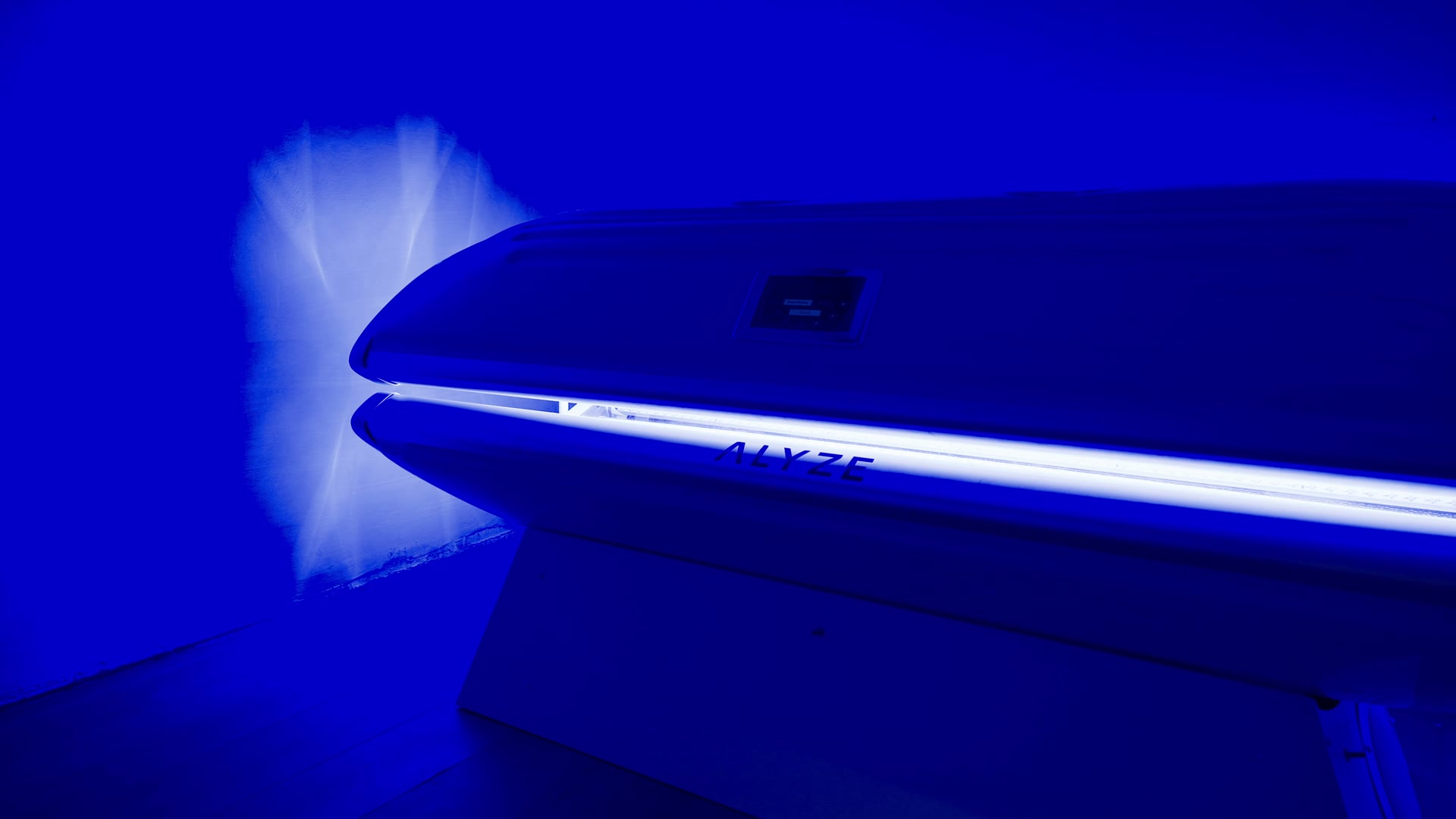
Red and near-infrared light (630 to 850nm) penetrates tissue and is absorbed by cytochrome c oxidase in the mitochondria, enhancing the electron transport chain and increasing ATP production. Clinical studies have demonstrated benefits for muscle recovery, joint pain, inflammation reduction, and wound healing. The most robust evidence supports its use for reducing delayed-onset muscle soreness (DOMS) and accelerating tissue repair when applied within hours of training.
PEMF devices deliver electromagnetic pulses that penetrate tissue and influence cellular signaling, ion exchange, and blood flow. Clinical evidence supports its use for bone healing, pain reduction, and inflammation management. While the research on PEMF for general athletic recovery is still developing, the mechanism — enhancing cellular energy production and reducing inflammation at the tissue level — aligns with the broader goals of structured recovery.
Overtraining syndrome is not caused by training too much. It is caused by recovering too little. The symptoms — chronic fatigue, declining performance, mood disturbance, hormonal suppression, increased injury rate, and immune dysfunction — are the result of a sustained imbalance between training stress and recovery capacity.
What makes overtraining insidious is that the early stages feel like progress. You train harder, you push through fatigue, you interpret soreness as evidence of effort. By the time performance measurably declines, the damage — hormonal dysregulation, nervous system exhaustion, chronic inflammation — may take weeks or months to reverse.
The solution is not to train less. It is to recover with the same intentionality with which you train. To measure recovery objectively (HRV, sleep quality, subjective readiness scores) and adjust training load accordingly. To treat recovery protocols — sauna, cold plunge, breathwork, adequate sleep, proper nutrition — not as optional extras but as essential components of the training program itself.
At ALYZE, recovery is not a department separate from fitness or medicine. It is woven into every member's program. Your training data informs your recovery prescription. Your HRV and sleep metrics determine whether today is a push day or a recovery day. Your bloodwork reveals whether inflammation is resolving appropriately or accumulating. Your sauna and cold plunge sessions are programmed with the same specificity as your sets and reps.
Because the members who make the most progress are not the ones who train the hardest. They are the ones who recover the smartest — and who understand that every adaptation they are chasing happens not during the workout, but in the hours and days after.
Bountiful, Utah · alyze.health
